This page contains affiliate links. If you buy through one, My Cooking Era may earn a commission at no extra cost to you. Recommendations include useful tools and optional kitchen treats. How we handle affiliate links. As an Amazon Associate I earn from qualifying purchases.
A good kitchen kit makes familiar jobs easier: chop something, measure something, heat something, check it, and clean up. You do not need an impressive counter full of equipment to do those jobs well. Start with the recipe you want to make and fill the actual gaps in your cupboard.
Your first ten essentials
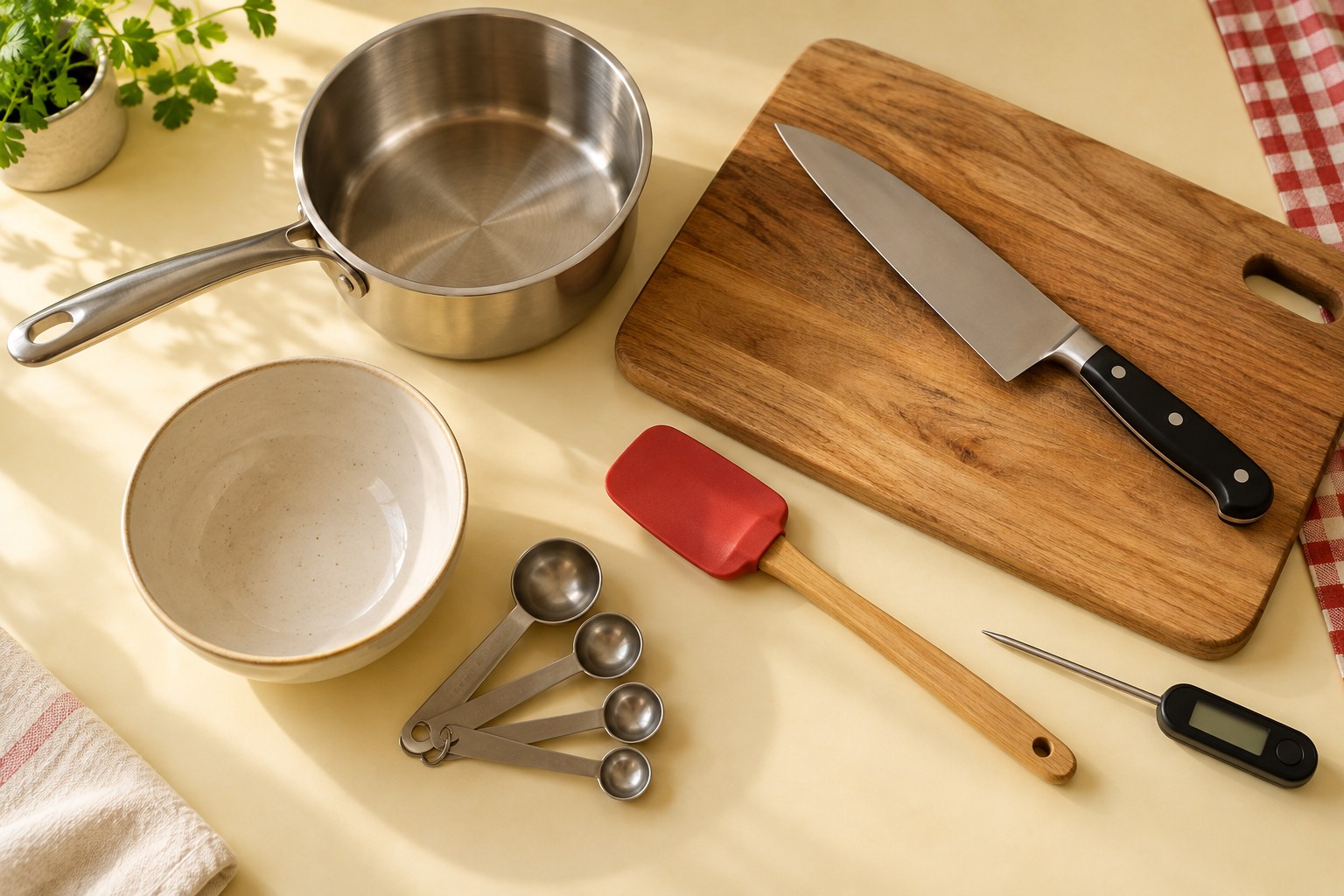
- A comfortable chef’s knife. Choose a handle you can grip securely and a size you can control. A knife that feels too heavy in the shop will not become easier to use when you are tired. A chef’s knife and a small paring knife cover many everyday jobs; a large matching block can wait.
- A stable cutting board. Give yourself room to work. A washable board with a nonslip base is a practical place to start. Keep it steady on the counter and separate ready-to-eat ingredients from raw meat preparation.
- One skillet. Choose a pan you can lift safely, with a handle that feels secure. A nonstick skillet helps with delicate foods; stainless steel suits browning. Check cooktop compatibility and follow the coating’s utensil and heat guidance.
- A saucepan with a lid. A 2–3 quart saucepan is useful for grains, sauces and small batches of soup. Choose capacity based on how many people you usually feed.
- A rimmed baking sheet. Roast vegetables, bake cookies and set a tray of dipped treats on the same useful surface. The Nordic Ware Naturals half sheet is a researched example; measure your oven and storage space first.
- A bowl and measuring tools. A nesting bowl set, measuring cups and spoons, and a liquid measure help you follow the method consistently. Use a digital scale when a baking recipe gives weights.
- A flexible spatula and tongs. A heat-rated silicone spatula scrapes bowls and stirs sauces. OXO 12-inch stainless steel locking tongs are one option for turning food; choose coating-safe tips when your pan requires them.
- An instant-read food thermometer. A digital food thermometer helps you check internal temperature. It is different from a candy thermometer or a probe designed to stay in the oven. Use the FoodSafety.gov temperature chart with the correct placement instructions.
- A colander. A stable colander handles pasta, rinsed beans and washed produce. Make sure it fits your sink and that the handles are comfortable.
- Dry oven mitts and a timer. Choose well-fitting oven mitts rated for the task. Your phone timer can do the timing job; set it before you step away.
Buy in the order your cooking asks
For pasta, start with your pot, colander and stirring tool. For a tray of treats, prioritize a bowl, spatula, baking sheet and parchment. For cooking meat, make room for the thermometer. Owning everything on this list is not an entry requirement.
What can wait
A stand mixer, decorative bakeware, a full knife block and duplicate pan sets can wait until you know how often you will use them. One small purchase that solves a repeated frustration is usually more useful than an entire coordinated collection.
These are buying considerations and researched examples, not hands-on product reviews. Manufacturer references: Nordic Ware half sheet and OXO tongs. Check the exact product, seller, size and care instructions before buying.