← Explore your holiday cooking era
A child’s cooking job can be stirring a bowl, spreading a topping or choosing where a paper place card goes. Start with one small project and an adult who can stay present. Ask the caregiver about food allergies, textures and safe serving sizes; these ideas are not infant-feeding guidance.
These are original practice ideas, not independently kitchen-tested recipes. Package directions and your child’s needs take priority. Adults handle knives, ovens and hot dishes.
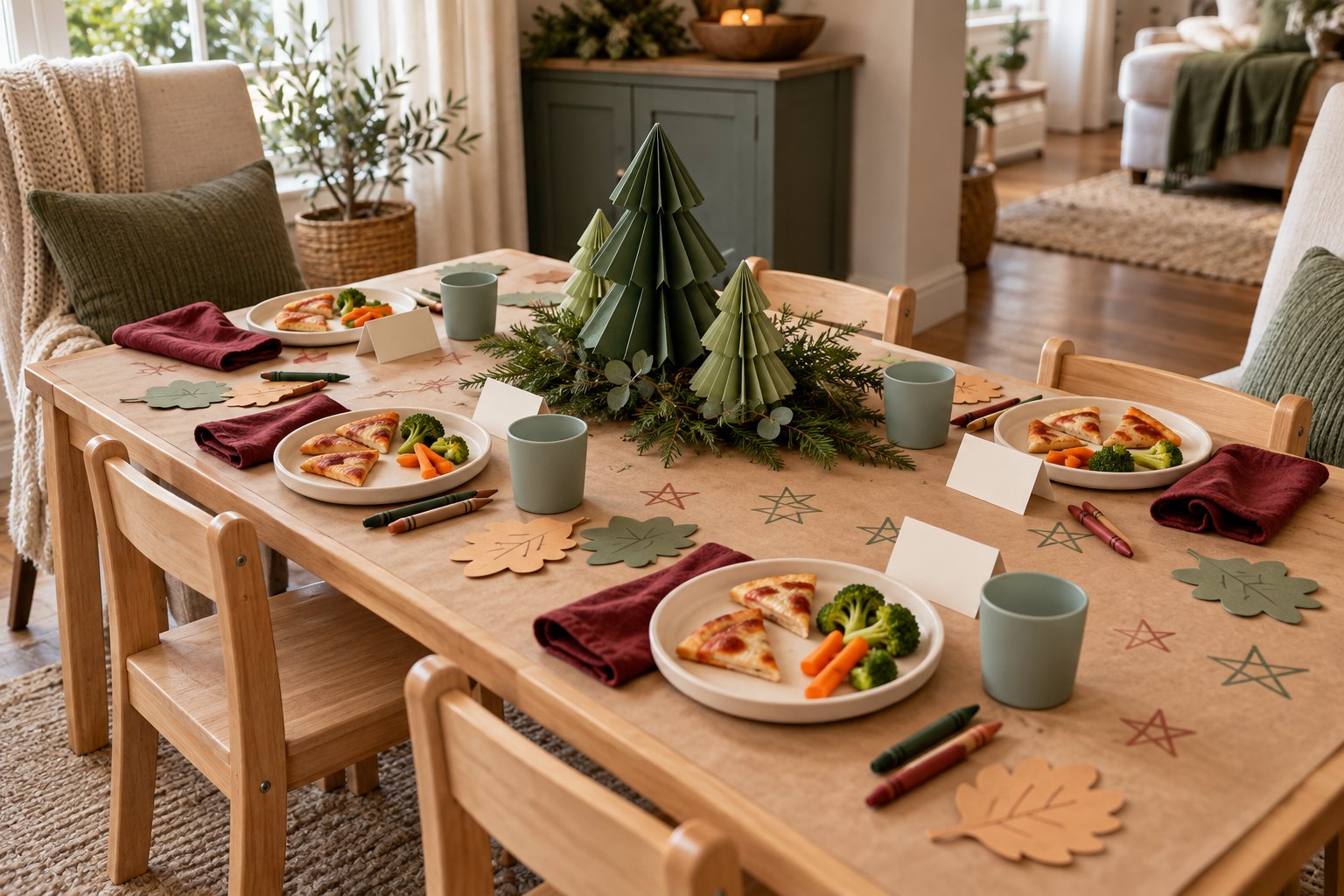
Soft pita pizza trees · two small pitas
Gather: 2 small soft pitas, ¼ cup prepared pizza sauce, ½ cup finely grated mozzarella and ¼ cup finely chopped cooked vegetables. Check labels; these typically contain wheat and milk.
- An adult heats the oven to 375°F (190°C) and places the pitas on a suitable tray.
- Children spread a thin layer of sauce with a spoon and sprinkle on cheese. Add a few small pieces of cooked vegetables.
- An adult bakes about 7–10 minutes, until hot and the cheese is melted, checking early because pita thickness varies.
- Let cool to a comfortable eating temperature. An adult cuts triangles and adjusts pieces for the child. Call them trees; no hard pretzel trunk or toothpick required.
Winter-white yogurt swirls · two small bowls
Divide 1 cup plain pasteurized yogurt between two bowls. Swirl 2 tablespoons smooth unsweetened applesauce into each with a clean spoon. An adult can add a small dusting of cinnamon if it is familiar to the child. Serve cold and promptly; yogurt contains milk. This is a snack assembly idea, not a complete meal.
Invite children to make a “snow path” with the spoon rather than adding hard candy, whole berries or loose decorations. Keep a plain portion available for the child who prefers foods separate. There is no prize for the most elaborate bowl.
Cinnamon toast stars · for children who manage toast safely
Use the measured cinnamon-butter toast lesson. A grown-up toasts plain bread first, then helps spread the topping; never put buttered bread in a pop-up toaster. An adult can cut soft-centered shapes with a cutter or knife. Save the offcuts for eating rather than making only a pretty center.
This sweet project suits older children better than infants or very young toddlers. Choose textures and portions with the caregiver. Hard, crunchy toast is not automatically appropriate for a young child.
Make the making the activity
- Give one clear job
“Spread the sauce on this pita” is easier to follow than “Help with dinner.” Put just the needed ingredients within reach.
- Allow an ordinary result
A lopsided pizza is still dinner. Keep food handling safe without rearranging every decorative choice.
- Pause for cleanup
Put used utensils in a safe spot and wipe spills before moving to the next step. Wash hands again when needed.
- Sit and enjoy
Children eat seated with an attentive adult. Take any photo before eating, then put the phone away.
Keep popcorn, whole nuts, hard candy, marshmallows, whole grapes and small decorative picks away from young children. Read the kids’ table and choking-prevention notes before adapting other holiday recipes. The older-kid cookie-decorating table can sit beside a younger child’s paper-and-crayon activity, with different foods for each.