← Explore your holiday cooking era
The best kids’ table is close to the people who care for them. Ask parents which seating arrangement works: a separate table is optional, and younger children may need their usual supported seat beside an adult. Comfort and supervision come before the photograph.
Start with the actual children
Find out ages, food preferences, allergies, feeding needs and whether anyone wants a quieter place. A child who dislikes sticky hands may prefer drawing to cookie decorating. A child who feels overwhelmed can join for the meal and step away afterward. Nobody needs to earn dessert by joining a group activity.
- Set the place
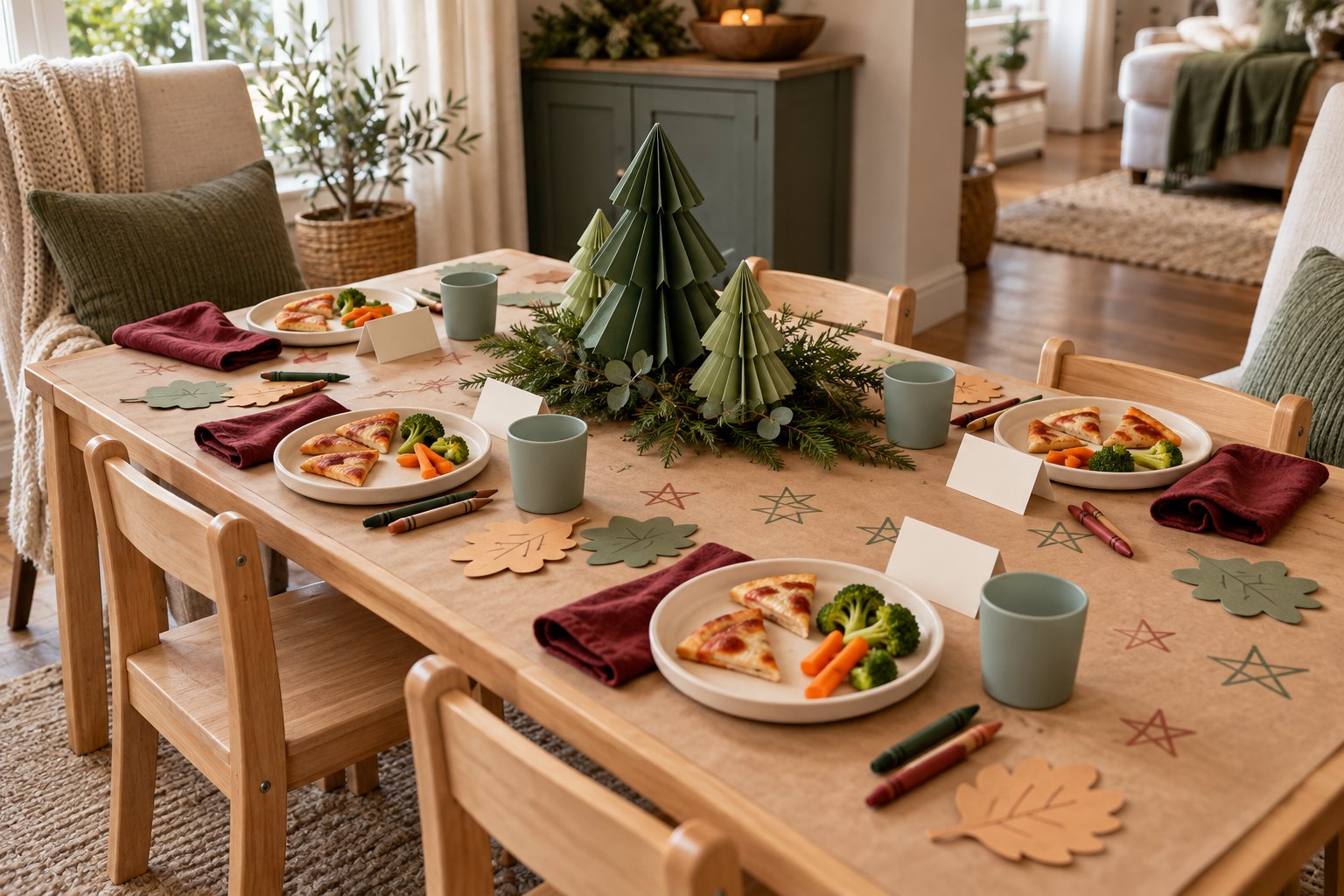
Use stable, age-appropriate seating, unbreakable dishes and small water cups. Keep walking routes open and an adult within easy reach.
- Make one thing familiar
Offer a food the child already enjoys, prepared in the size and texture their caregiver recommends. Keep sauces and decorations separate.
- Add a quiet invitation
Tape down a paper runner away from food. Offer large crayons appropriate to the child’s age and draw a few stars or leaves to color.
- Give them a small role
Invite an older child to draw place cards or choose one song. Adults handle knives, hot pans and drink service.
A simple plate, not a surprise tasting menu
Soft pita pizza triangles, soft cooked vegetables and a small familiar dessert can feel festive without an elaborate presentation. See three playful food projects. The caregiver should choose safe portions and textures for each child; the illustration is a table idea, not a feeding-size guide.
For young children, avoid choking hazards such as whole grapes, popcorn, whole nuts, hard or sticky candy and marshmallows. Modify foods according to age and ability, have children sit upright while eating, and supervise closely. Keep toothpicks, small favors, balloons and loose decorations away. The CDC choking-prevention guide has more detail.
Three activities that belong at the table
- A gratitude placemat: draw three empty circles headed “Someone,” “Something,” and “A place.” Children can draw answers or leave them blank. Adults can write dictated words.
- Design a very silly restaurant: invent a name and draw one imaginary dish. The mashed-potato mountain café is open.
- Pass the picture: each willing person adds one detail to a large paper holiday scene, then passes it on. Keep the paper and crayons separate from food.
Save louder games for after the meal. Do not use eating competitions or ask children to laugh and talk with food in their mouths. A small quiet corner with a familiar book is a useful alternative, not a punishment.
Make the table feel part of the celebration
Use the same napkin color as the grown-up table. Let everyone participate in the toast with their own drink. Invite the children to share their restaurant drawing if they want to; avoid turning every activity into a performance for phones.
For a gentle countdown, let them hold a large paper star and sing one favorite song. For Thanksgiving, fold the drawings into a family memory envelope. For Christmas Eve, put a small thank-you note at each seat.
Use ordinary paper, crayons and dishes first. If you need something, start with the kitchen shop and buy for a real need. A calm adult, familiar food and a warm welcome are the essential parts.